Olex Vs Cirona (Devon) DVT Pump Comparison
Compare Olex DVT Pump and Cirona (Devon) DVT Pump. Explore features, portability, compression therapy, battery backup, specifications, applications, and choose the right DVT pump for post-surgical recovery and home care.
Updated on 19 Jun 2026 | 4 min readDeep Vein Thrombosis (DVT) is a serious condition that can occur after major surgery, prolonged bed rest, trauma, or extended periods of immobility. Sequential Compression Devices (DVT Pumps) help improve blood circulation in the legs by applying intermittent pneumatic compression, reducing the risk of blood clot formation.
Among the commonly used portable DVT therapy systems, the Olex DVT Pump and Cirona (Devon) DVT Pump are two popular choices for hospitals, rehabilitation centres, and home healthcare. Both devices are designed to provide effective DVT prevention therapy while offering user-friendly operation and reliable compression performance.
This guide compares both devices to help healthcare providers, caregivers, and patients understand their features and choose the most suitable option.
Olex DVT Pump Overview
The Olex DVT Pump is designed to deliver intermittent pneumatic compression therapy for patients at risk of developing Deep Vein Thrombosis. It is widely used after orthopedic surgeries, joint replacement procedures, trauma cases, and prolonged bed rest.
Its compact design and simple controls make it suitable for hospitals as well as home healthcare environments. Many home-care providers prefer the Olex model because of its portability, straightforward operation, and affordability.
Key Features
-
Sequential pneumatic compression therapy
-
Compact and lightweight design
-
Easy-to-use control panel
-
Comfortable compression sleeves
-
Quiet operation
-
Suitable for home and hospital use
-
Portable design for easy transportation
-
Designed for post-operative DVT prevention
Cirona (Devon) DVT Pump Overview
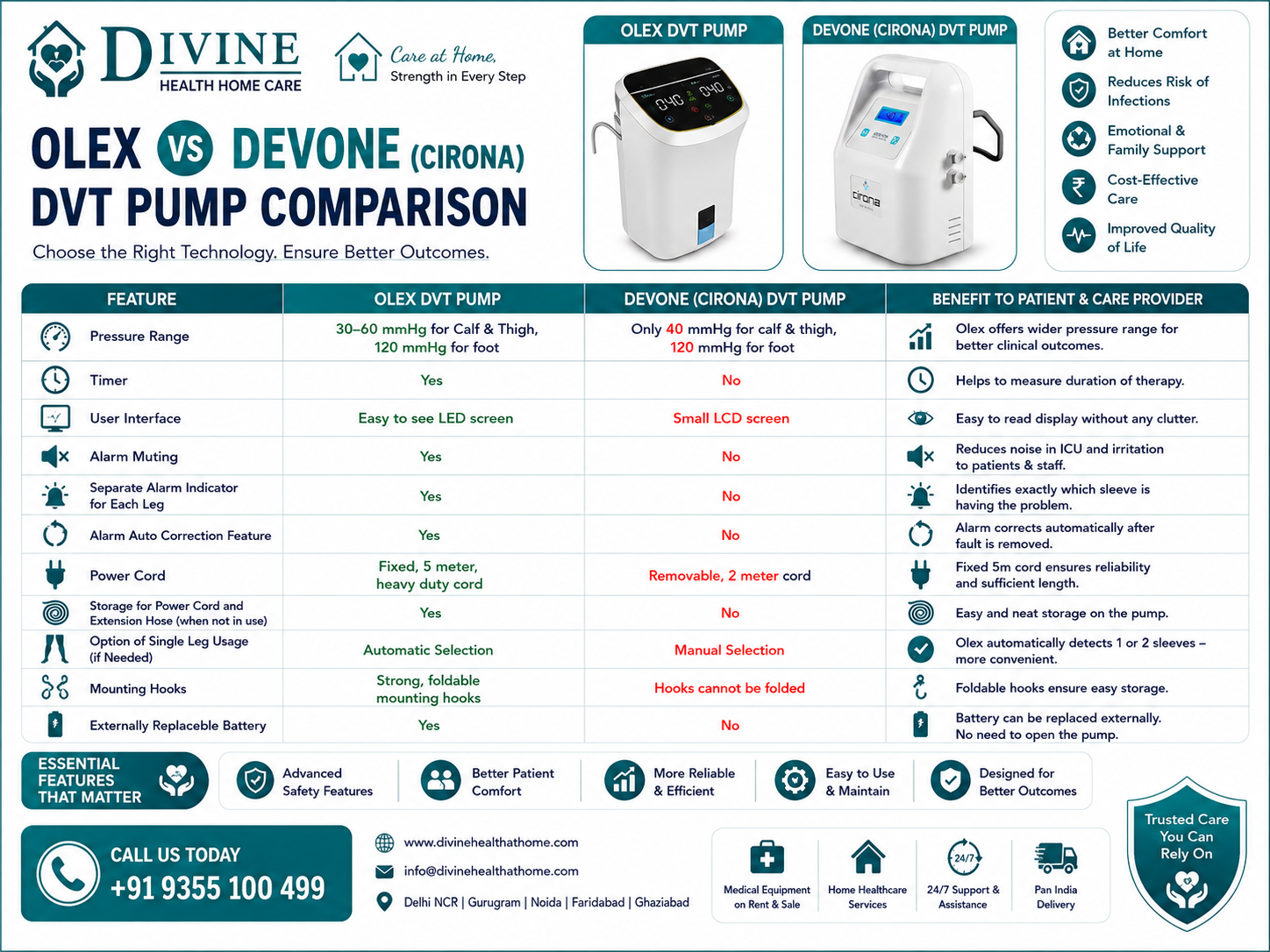
The Cirona (Devon) 6200 DVT Pump is a clinically designed intermittent pneumatic compression system intended to increase venous blood flow and reduce the incidence of Deep Vein Thrombosis in at-risk patients. It alternately inflates compression garments on each leg using a timed compression cycle of approximately 12 seconds inflation followed by 48 seconds relaxation at about 40 mmHg. It supports calf, foot, and calf-thigh sleeves and is used in hospitals as well as home care.
Key Features
-
Sequential intermittent pneumatic compression
-
Automatic therapy cycle
-
Lightweight portable unit
-
LCD display
-
Battery backup (model dependent)
-
Compatible with multiple sleeve types
-
Quiet operation
-
Hospital and home healthcare use
Both models are compact and lightweight.
-
Olex is designed with simplicity for home use.
-
Cirona (Devon) offers similar portability and, in many versions, integrated battery backup for added flexibility.
Olex -
Calf sleeves
-
Sequential compression garments
Cirona (Devon)
-
Calf sleeves
-
Foot sleeves
-
Calf-thigh sleeves
Cirona provides broader garment compatibility.
Battery backup depends on the specific model.
-
Olex models may include battery support.
-
Cirona 6200 models commonly provide up to approximately 6 hours of battery operation.
Clinical Applications
Both pumps are commonly used for:
-
Knee replacement surgery
-
Hip replacement surgery
-
Orthopedic procedures
-
General surgery
-
Trauma patients
-
Stroke rehabilitation
-
ICU patients
-
Bedridden patients
-
Long-term immobility
-
Home recovery after discharge
Advantages of Olex DVT Pump
-
Compact and lightweight
-
Easy operation
-
Reliable compression therapy
-
Suitable for home healthcare
-
Cost-effective option
-
Simple maintenance
Advantages of Cirona (Devon) DVT Pump
-
Clinically established compression cycle
-
Multiple sleeve compatibility
-
Portable with battery-powered operation (selected models)
-
LCD display
-
Suitable for hospital and home use
-
Widely used in post-operative care