Manual Bed vs Electric Bed
Compare manual beds vs electric hospital beds. Learn the differences, features, benefits, advantages, disadvantages, and how to choose the best hospital bed for home care, elderly patients, and post-surgery recovery.
Updated on 28 Jun 2026 | 4 min readChoosing the right hospital bed is an important decision for patient comfort, recovery, and caregiver convenience. Two of the most common options available are manual hospital beds and electric hospital beds. While both are designed to provide safe and comfortable patient care, they differ significantly in terms of operation, convenience, adjustment features, and overall user experience.
The ideal choice depends on the patient's medical condition, mobility level, duration of care, and budget. Understanding the differences between manual and electric hospital beds can help families and caregivers select the most appropriate solution for home healthcare or hospital use.
What is a Manual Hospital Bed?
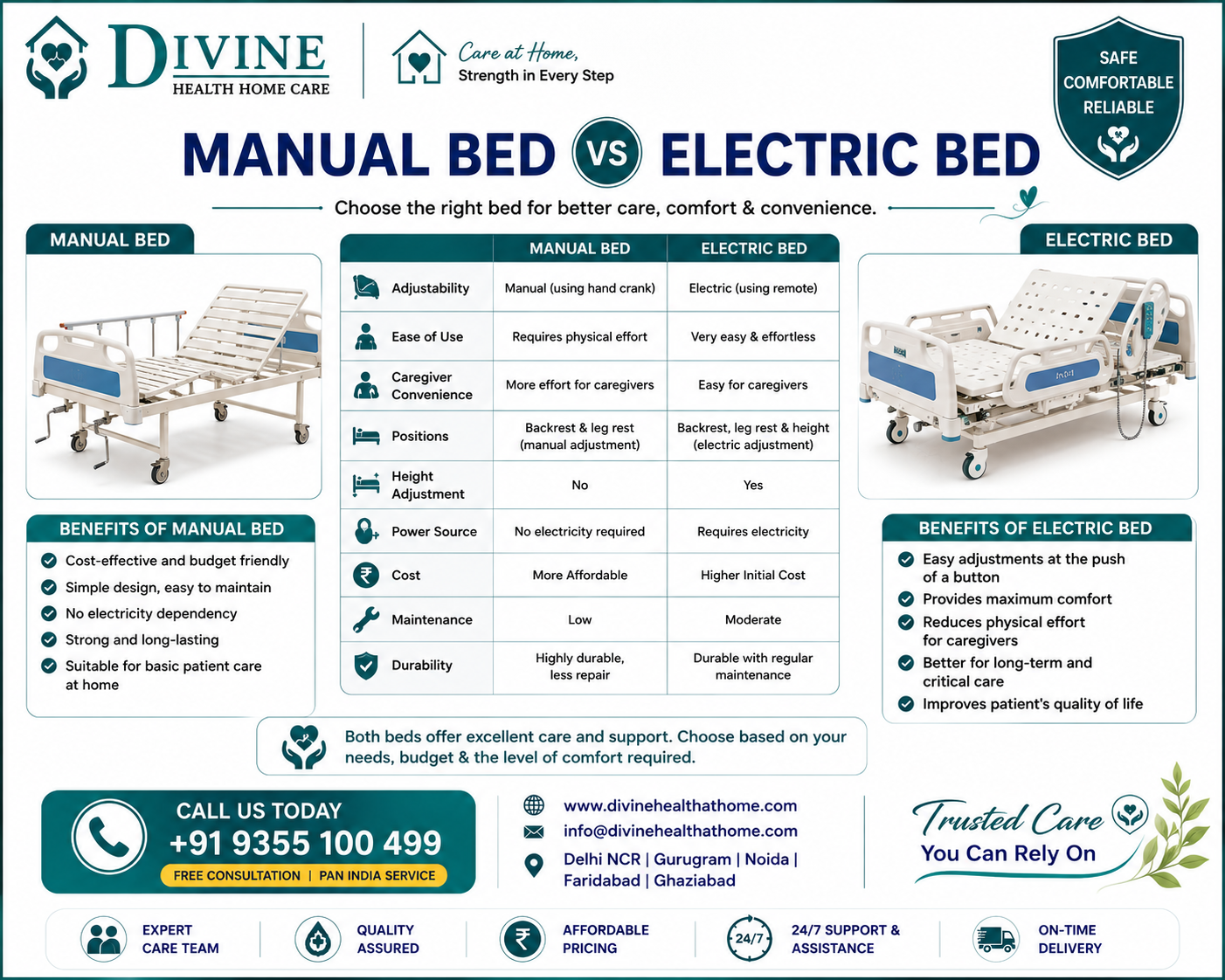
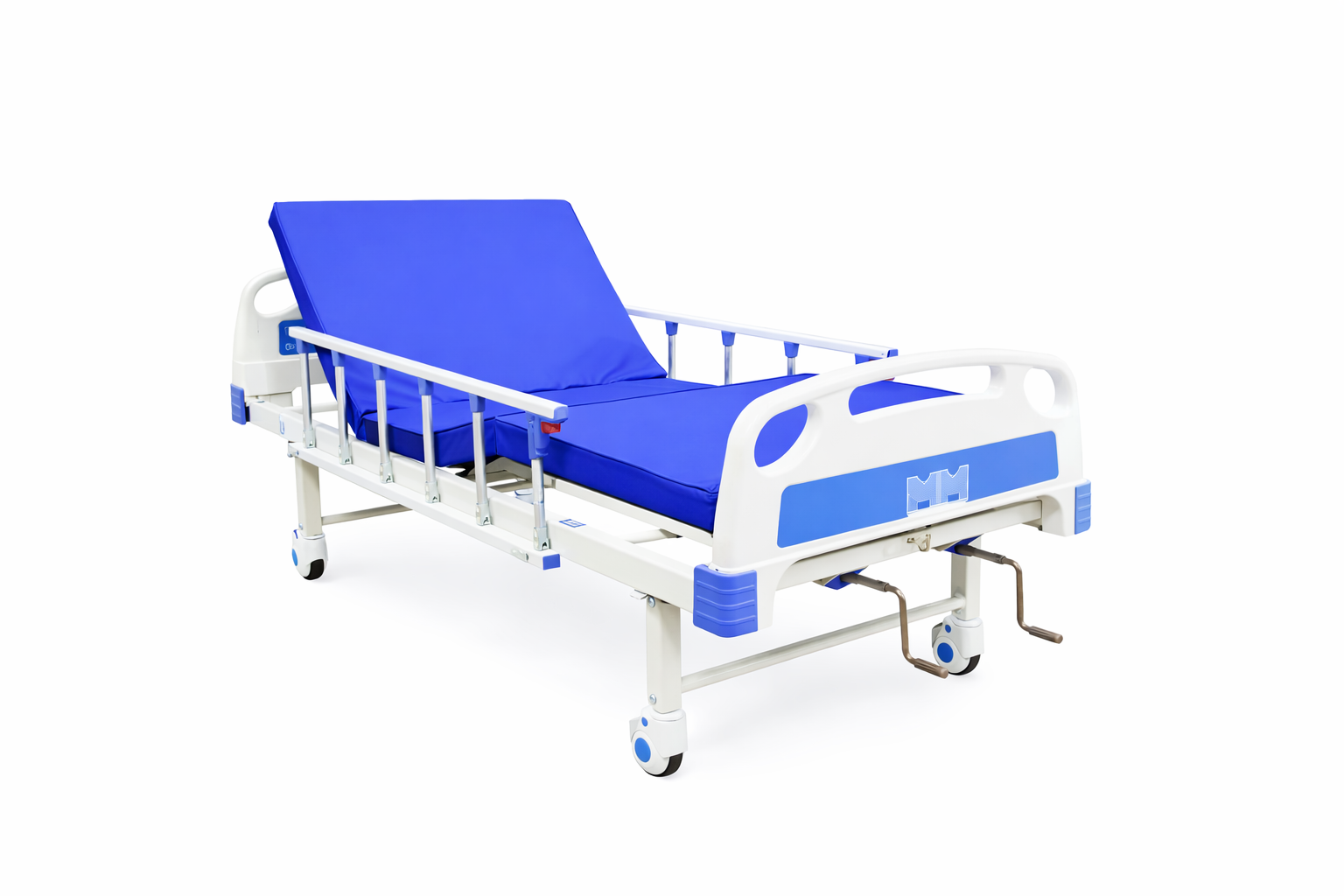
A manual hospital bed is operated using hand cranks to adjust the backrest, leg section, and, in some models, bed height. Since adjustments are made manually, caregivers need to physically turn the crank whenever the patient's position needs to be changed.
Manual beds are simple, durable, and cost-effective, making them suitable for short-term recovery and basic patient care.
Benefits of Manual Hospital Beds
-
Affordable compared to electric beds
- No electricity required for operation
- Durable mechanical design
- Lower maintenance costs
- Suitable for temporary patient care
- Reliable during power outages
Limitations of Manual Hospital Beds
-
Requires physical effort to adjust
- Position changes take more time
- Less convenient for frequent repositioning
- Greater workload for caregivers
What is an Electric Hospital Bed?
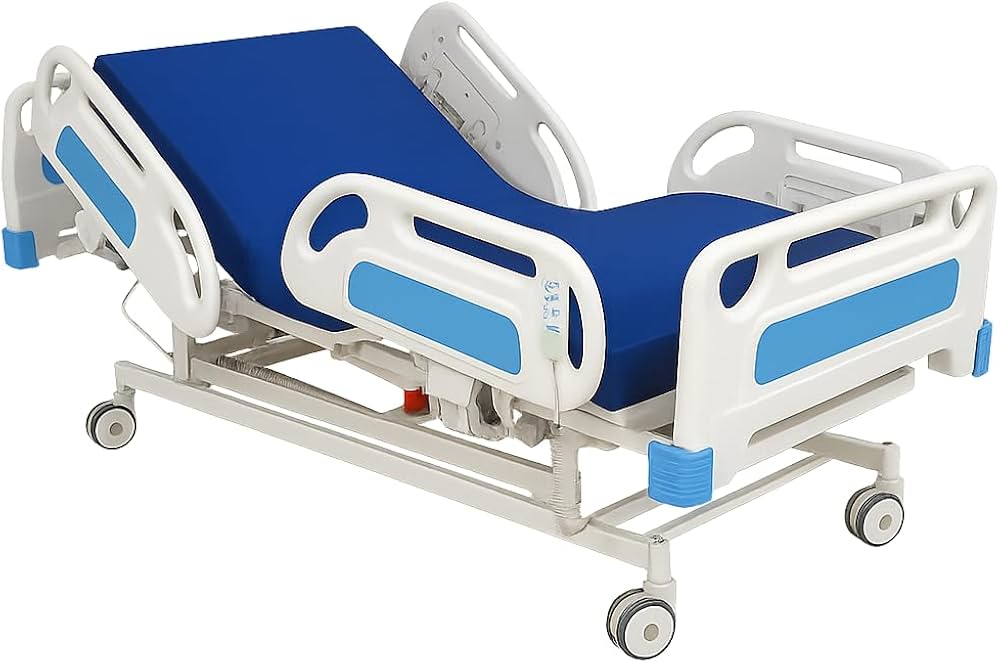
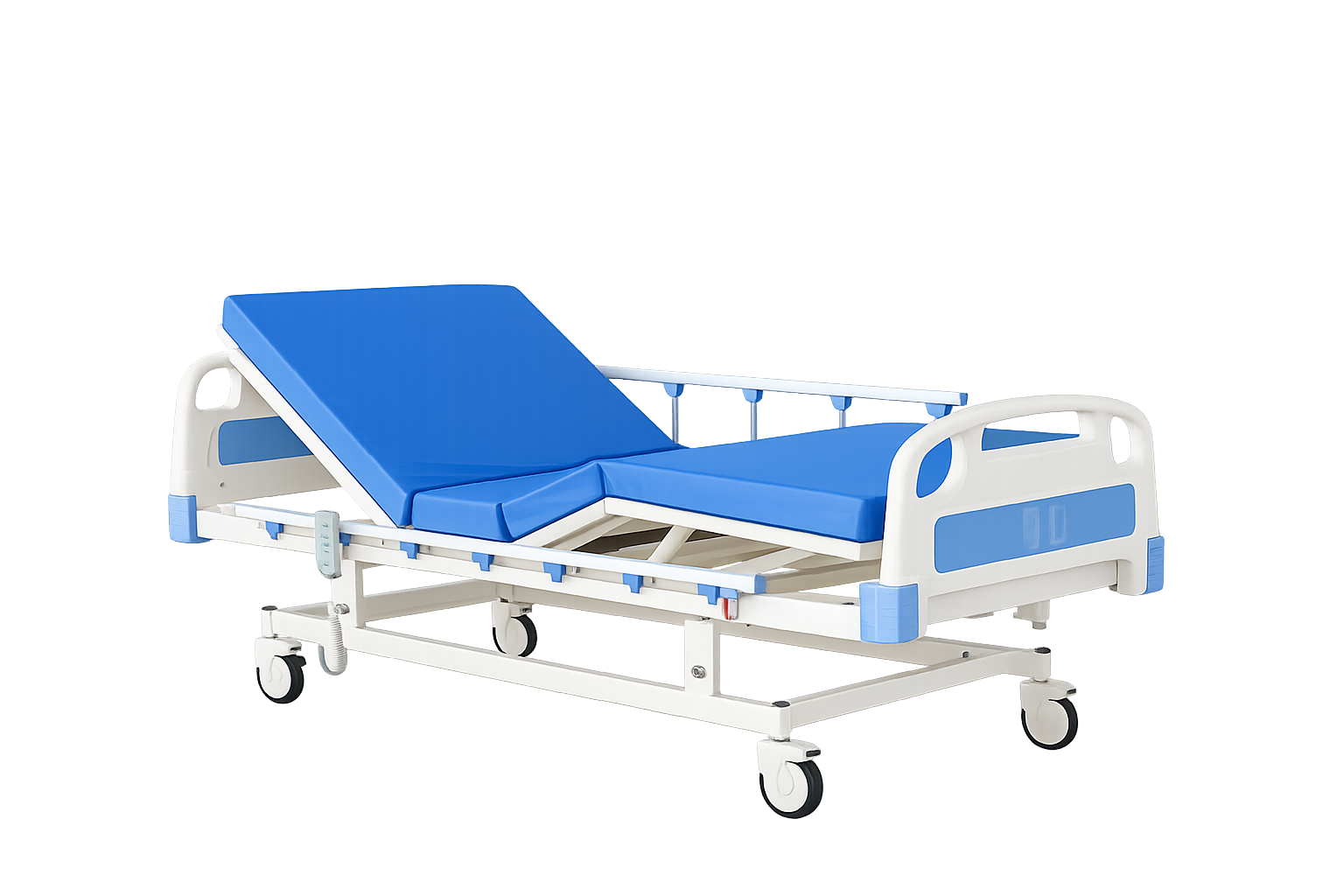
An electric hospital bed uses powerful electric motors to adjust the backrest, leg rest, and, in many models, the bed height. Patients or caregivers can easily change bed positions using a handheld remote control without any physical effort.
Electric hospital beds provide superior comfort and are commonly used for long-term home care, elderly patients, rehabilitation, and critical care.
Benefits of Electric Hospital Beds
-
Easy remote-controlled operation
- Quick adjustment of patient position
- Reduced caregiver effort
- Improved patient comfort
- Better support for long-term care
- Height adjustment for safer transfers
- Suitable for patients with limited mobility
- Smooth and quiet operation
Limitations of Electric Hospital Beds
-
Higher initial cost
- Requires electricity for operation
- Slightly higher maintenance than manual beds
Choose an Electric Hospital Bed If:
-
The patient requires long-term care.
- Frequent position changes are necessary.
- The patient has limited mobility.
- Caregivers need to reduce physical strain.
- Greater comfort and convenience are priorities.