BiPAP vs Ventilator
Compare BiPAP vs ventilator and understand the key differences, benefits, uses, and features. Learn when BiPAP or a ventilator is recommended for respiratory support, critical care, and home healthcare.
Updated on 28 Jun 2026 | 4 min readWhen a patient experiences breathing difficulties, doctors may recommend either a BiPAP machine or a mechanical ventilator, depending on the severity of the condition. Although both devices provide respiratory support, they serve different medical purposes and are used in different clinical situations.
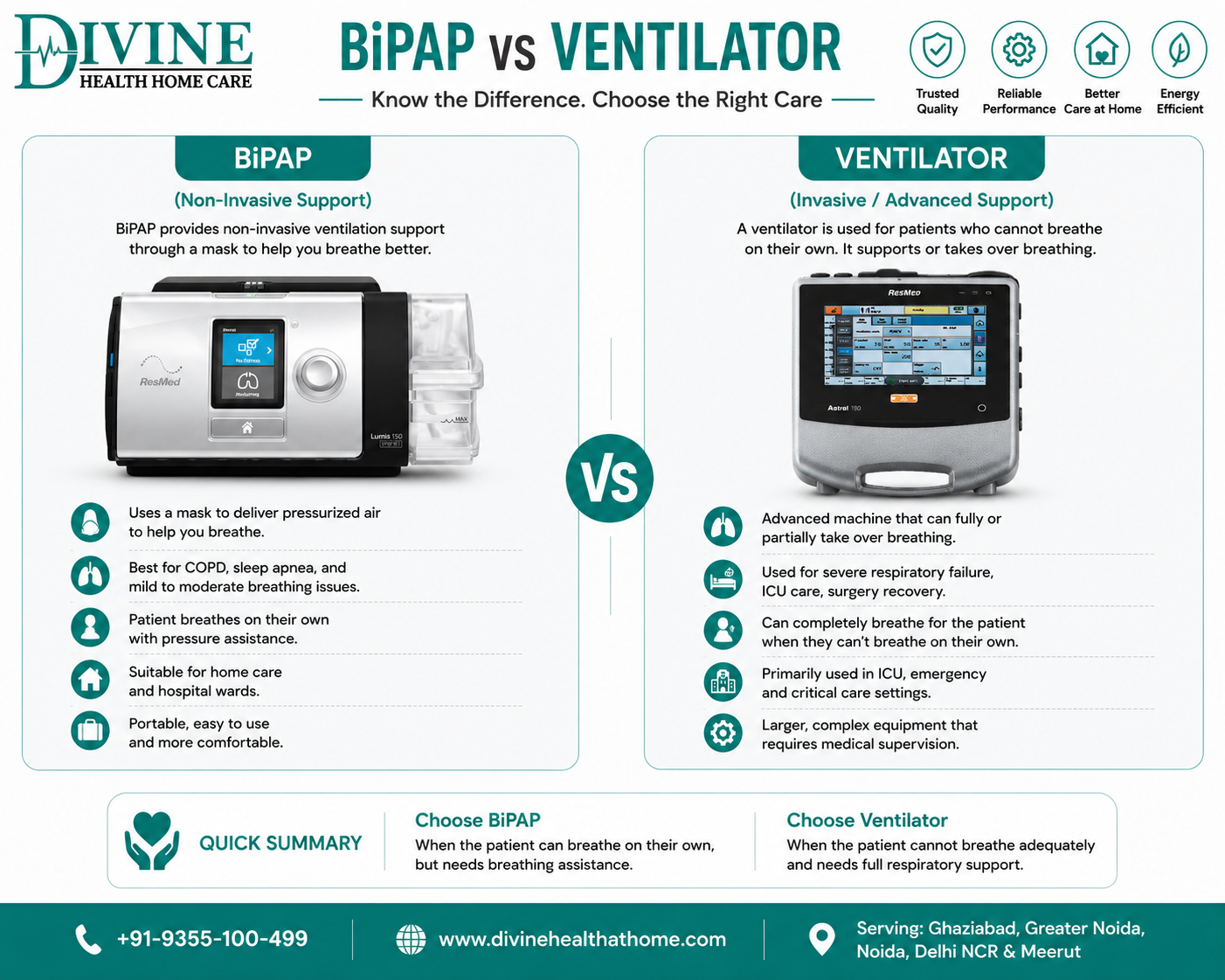
A BiPAP (Bilevel Positive Airway Pressure) machine helps patients breathe on their own by delivering pressurized air through a mask. In contrast, a ventilator can partially or completely take over the work of breathing when a patient is unable to breathe adequately without assistance.
Understanding the differences between these two devices helps patients and caregivers better understand their role in respiratory care. The appropriate device should always be selected by a qualified healthcare professional based on the patient's medical condition.
What is a BiPAP Machine?
A BiPAP machine is a non-invasive ventilation (NIV) device that delivers two different levels of positive air pressure:
- IPAP (Inspiratory Positive Airway Pressure): Higher pressure during inhalation.
- EPAP (Expiratory Positive Airway Pressure): Lower pressure during exhalation.
This pressure difference makes breathing easier while allowing the patient to continue breathing independently.
Common Uses of a BiPAP Machine
-
Obstructive Sleep Apnea (OSA)
- Chronic Obstructive Pulmonary Disease (COPD)
- Obesity Hypoventilation Syndrome
- Neuromuscular disorders
- Congestive heart failure (when prescribed)
- Certain chronic respiratory conditions
- Home respiratory support
What is a Ventilator?
A mechanical ventilator is an advanced life-support device that assists or completely controls a patient's breathing. It delivers oxygen-rich air into the lungs and helps remove carbon dioxide when the patient cannot breathe effectively on their own.
Ventilators may be used with:
- Endotracheal tube (invasive ventilation)
- Tracheostomy tube
- Non-invasive masks in selected situations
Mechanical ventilators are commonly used in intensive care units (ICUs), emergency departments, operating rooms, and advanced home healthcare under specialist supervision.
Advantages of a BiPAP Machine
-
Non-invasive therapy
- Comfortable mask-based treatment
- Supports natural breathing
- Can often be used at home
- Portable and compact
- Helps reduce the work of breathing
- Suitable for long-term respiratory support in selected patients
Advantages of a Mechanical Ventilator
-
Provides complete breathing support when required
- Multiple ventilation modes
- Precise control of oxygen delivery and ventilation
- Continuous patient monitoring
- Supports critically ill patients
- Essential for intensive care and emergency medicine
Who May Need a BiPAP Machine?
- Obstructive Sleep Apnea
- COPD with chronic respiratory insufficiency
- Neuromuscular disorders
- Chronic respiratory failure
- Certain sleep-related breathing disorders
BiPAP therapy is appropriate only when the patient can still initiate breathing and is clinically suitable for non-invasive ventilation.
Who May Need a Ventilator?
Mechanical ventilation may be required for patients with:
- Severe respiratory failure
- Major trauma
- Serious pneumonia
- Acute respiratory distress syndrome (ARDS)
- Critical illness requiring intensive care
- General anesthesia during surgery
- Neurological conditions affecting breathing