Wheelchair vs Patient Transfer Chair
Compare Wheelchair vs Patient Transfer Chair and understand the differences, features, benefits, and applications. Learn which mobility aid is best for elderly individuals, patients with limited mobility, caregivers, and home healthcare.
Updated on 01 Jul 2026 | 4 min readWhen selecting a mobility aid for a patient or elderly family member, one common question is whether to choose a wheelchair or a patient transfer chair. Although both devices help improve mobility, they are designed for different purposes and offer distinct advantages depending on the patient's condition and daily care needs.
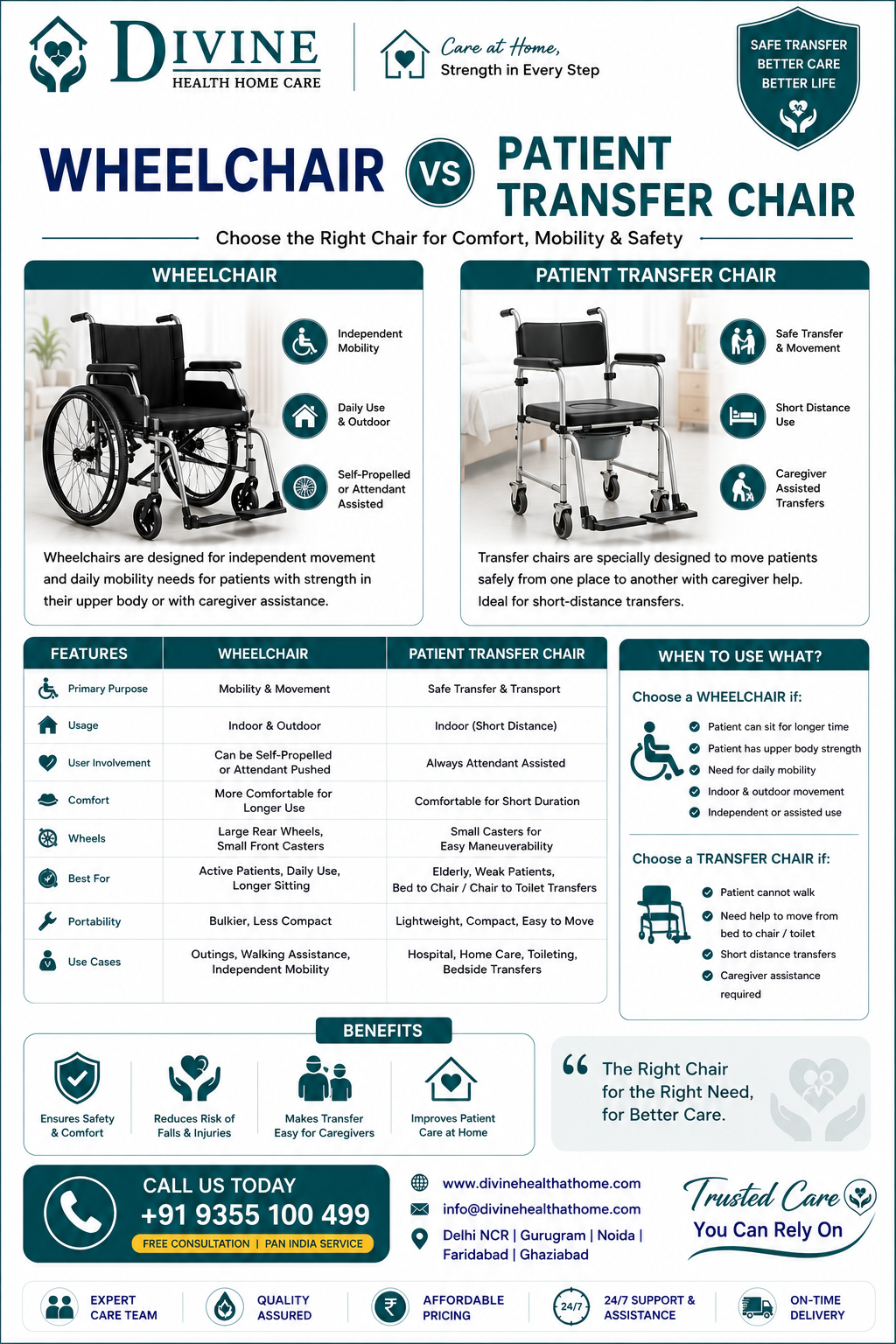
A wheelchair is intended for transporting or enabling independent mobility over longer distances, while a patient transfer chair is specifically designed to safely transfer patients between locations such as a bed, wheelchair, toilet, shower, sofa, or examination table. Understanding the differences between these two mobility solutions helps caregivers and families make an informed decision.
What is a Wheelchair?
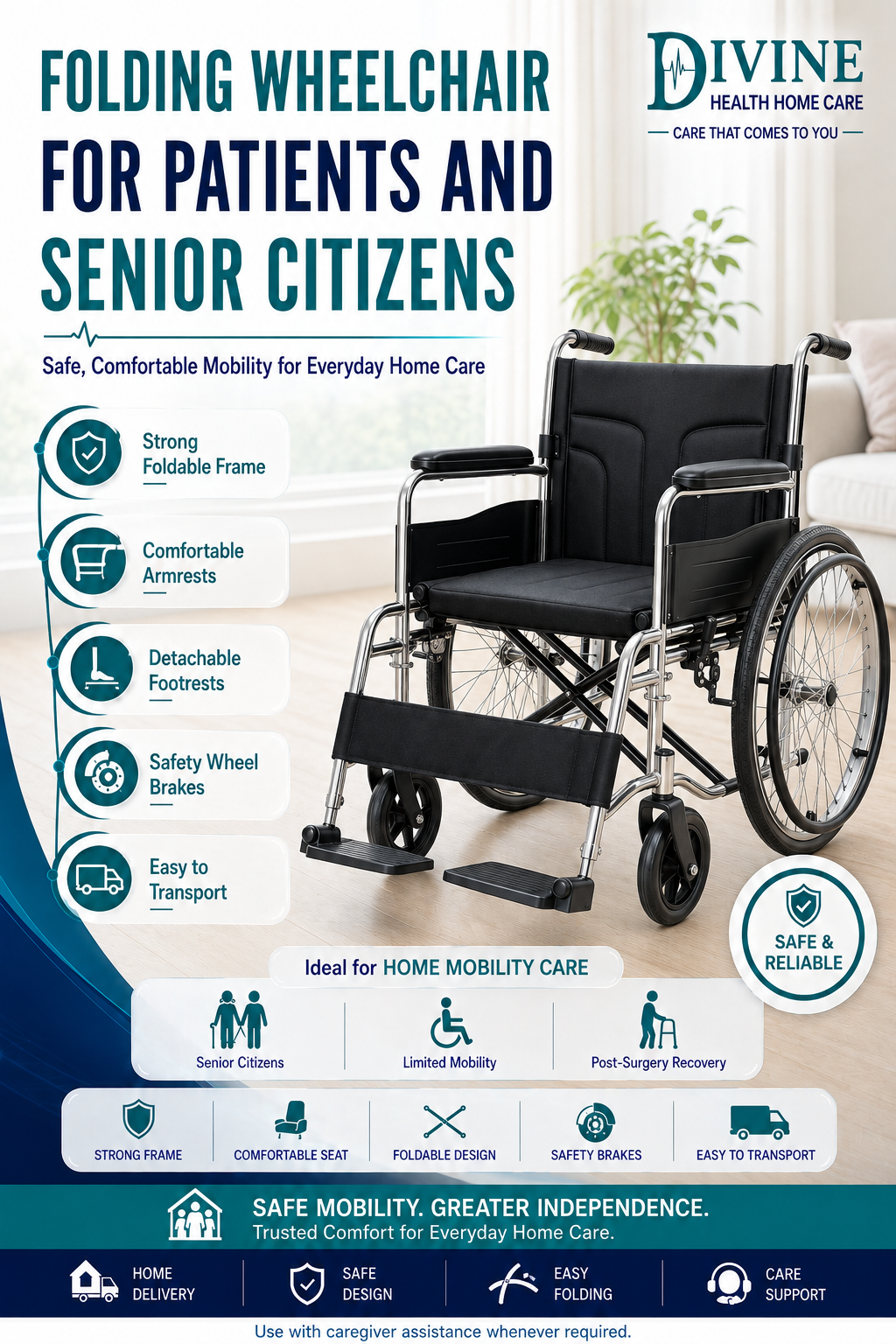
A wheelchair is a mobility device designed to help individuals move independently or with caregiver assistance. Manual and electric wheelchairs are available in various designs, including standard, reclining, lightweight, transport, and powered models.
Wheelchairs are intended for daily mobility both indoors and outdoors and allow users to remain seated comfortably for extended periods.
Common Uses of a Wheelchair
-
Daily indoor mobility
- Outdoor transportation
- Long-term mobility assistance
- Elderly care
- Rehabilitation
- Home healthcare
- Hospital patient mobility
What is a Patient Transfer Chair?
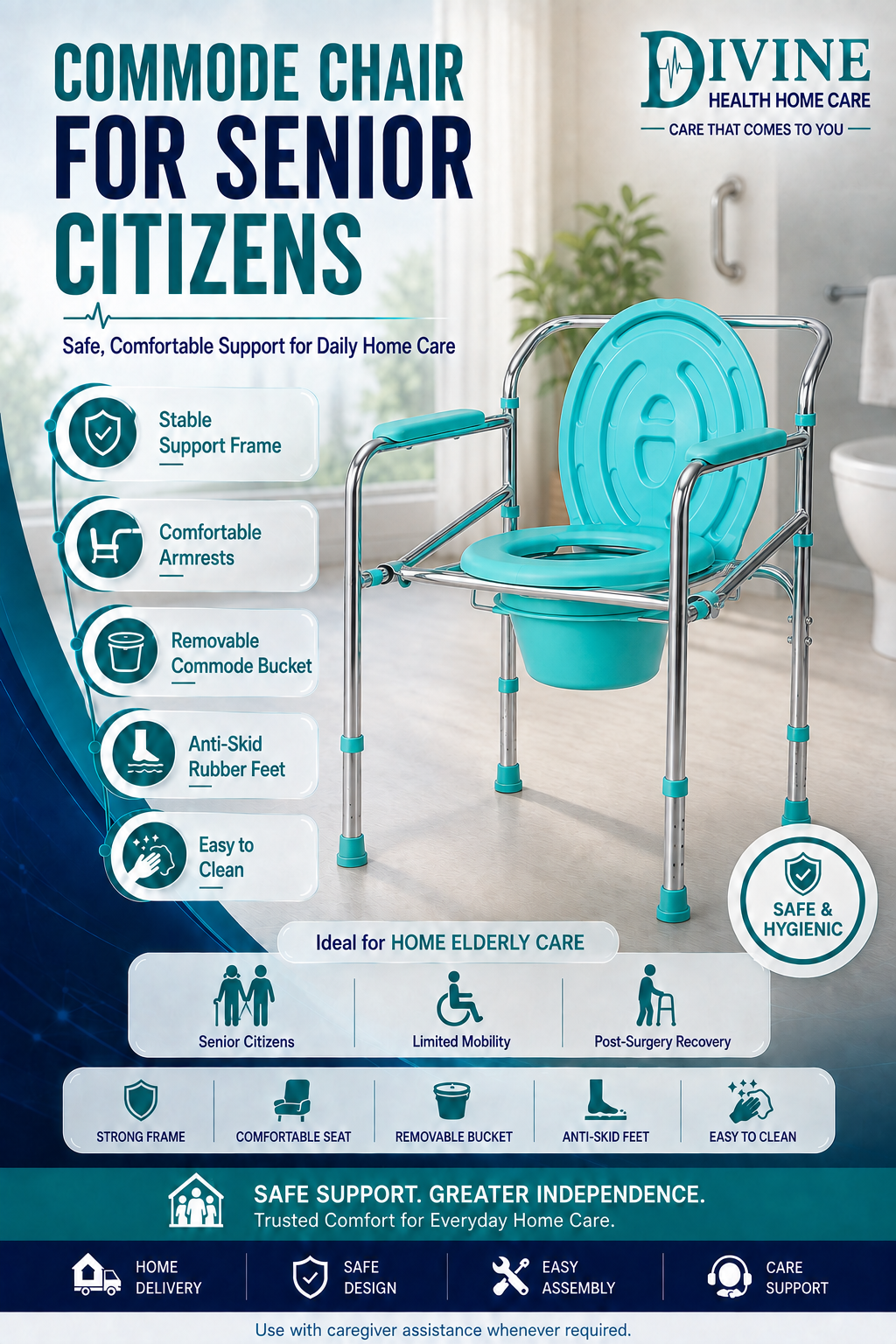
A patient transfer chair is a specialized mobility device designed to move patients safely from one surface to another with minimal lifting. It helps caregivers transfer individuals between a bed, wheelchair, toilet, shower, sofa, or vehicle while reducing physical strain and minimizing the risk of falls.
Many transfer chairs include lockable wheels, split seats, adjustable height, safety belts, footrests, and waterproof construction for use in bathrooms and healthcare settings.
Common Uses of a Patient Transfer Chair
-
Bed-to-wheelchair transfer
- Wheelchair-to-toilet transfer
- Bathroom and shower transfers
- Hospital patient transfers
- Nursing home care
- Home healthcare
- Rehabilitation assistance
Advantages of a Patient Transfer Chair
-
Simplifies patient transfers
- Reduces caregiver lifting effort
- Helps lower the risk of falls during transfers
- Makes bathroom and toilet access easier
- Suitable for individuals with very limited mobility
- Compact and easy to manoeuvre indoors
- Improves safety during daily care routines
Which Mobility Aid Should You Choose?
Choose a Wheelchair If:
-
The user needs independent or assisted daily mobility.
- Longer-distance movement is required.
- The patient remains seated for extended periods.
- Outdoor use is important.
- The goal is increased mobility and independence.
Choose a Patient Transfer Chair If:
-
The patient requires assistance moving between surfaces.
- Bed-to-chair and toilet transfers are frequent.
- The caregiver wants to reduce physical lifting.
- The patient has very limited mobility.
- Safe indoor transfers are the primary requirement.
Can Both Be Used Together?
Yes. Many patients benefit from using both devices. A wheelchair can be used for everyday mobility, while a patient transfer chair assists with safe transfers between the bed, toilet, shower, and other locations. Using each device for its intended purpose can improve patient comfort and make caregiving more efficient.