ICU at Home vs Hospital ICU
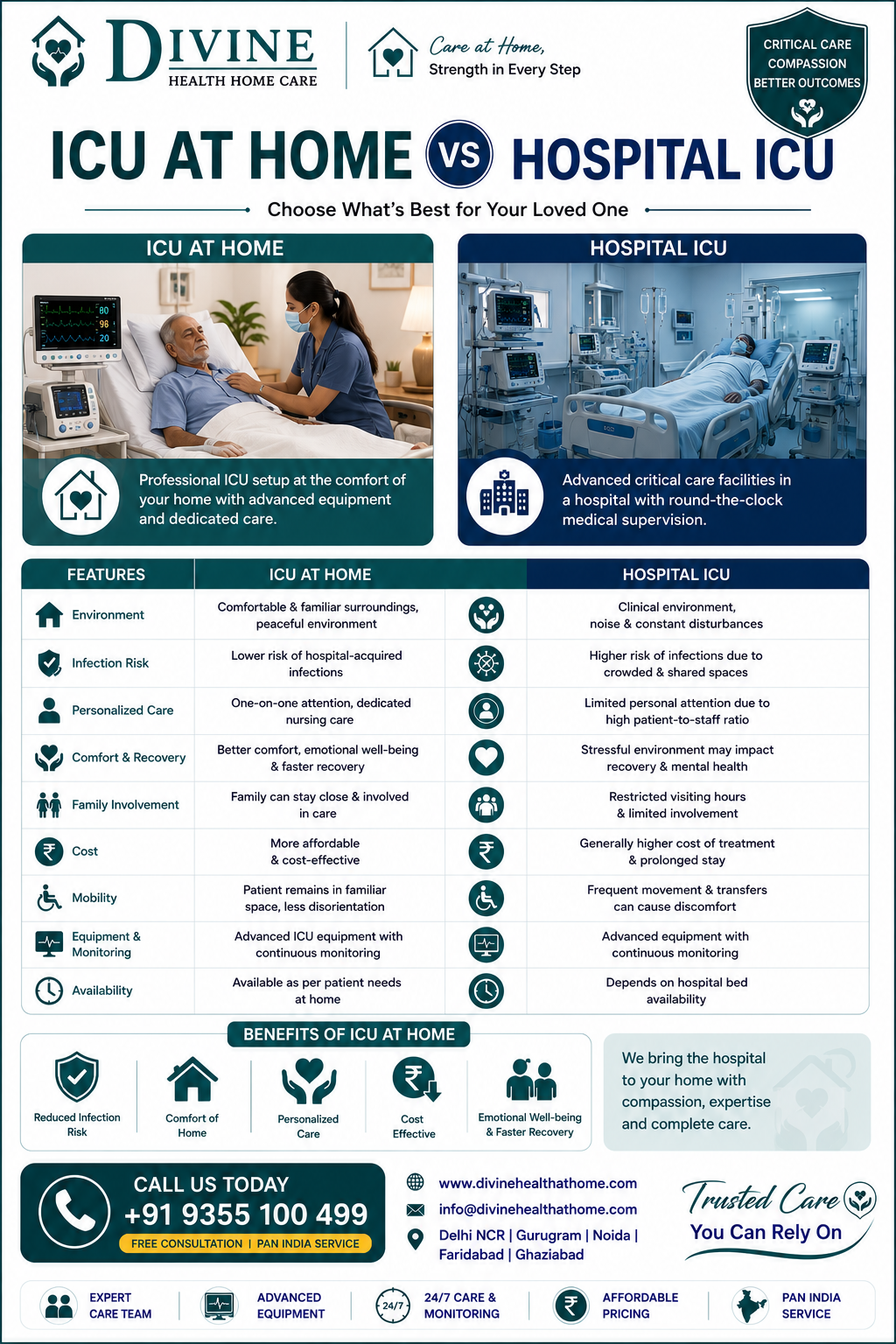
Compare ICU at Home vs Hospital ICU to understand the differences, benefits, costs, equipment, nursing care, and patient suitability. Learn which critical care option may be appropriate based on medical needs and professional guidance.
Updated on 01 Jul 2026 | 4 min readWhen a patient requires intensive medical care, families often ask whether ICU at Home or a Hospital ICU is the better option. Both provide critical care support, but they serve different purposes depending on the patient's medical condition, stability, and treatment requirements.
A Hospital ICU is designed for patients who require continuous monitoring, emergency intervention, and immediate access to specialists and advanced medical procedures. An ICU at Home is typically considered for medically stable patients who still need intensive monitoring, specialized equipment, and professional nursing care after being discharged from the hospital.
The most appropriate option should always be determined by the treating physician based on the patient's clinical condition and ongoing medical needs.
What is a Hospital ICU?
A Hospital Intensive Care Unit (ICU) is a specialized department equipped to manage critically ill patients requiring advanced life support and immediate medical intervention. It operates around the clock with a multidisciplinary team of intensivists, specialist doctors, nurses, respiratory therapists, and other healthcare professionals.
Hospital ICU is commonly required for:
-
Severe respiratory failure
- Septic shock
- Multiple organ failure
- Major trauma
- Serious cardiac emergencies
- Emergency surgery recovery
- Acute neurological conditions
- Patients requiring immediate life-saving interventions
What is ICU at Home?
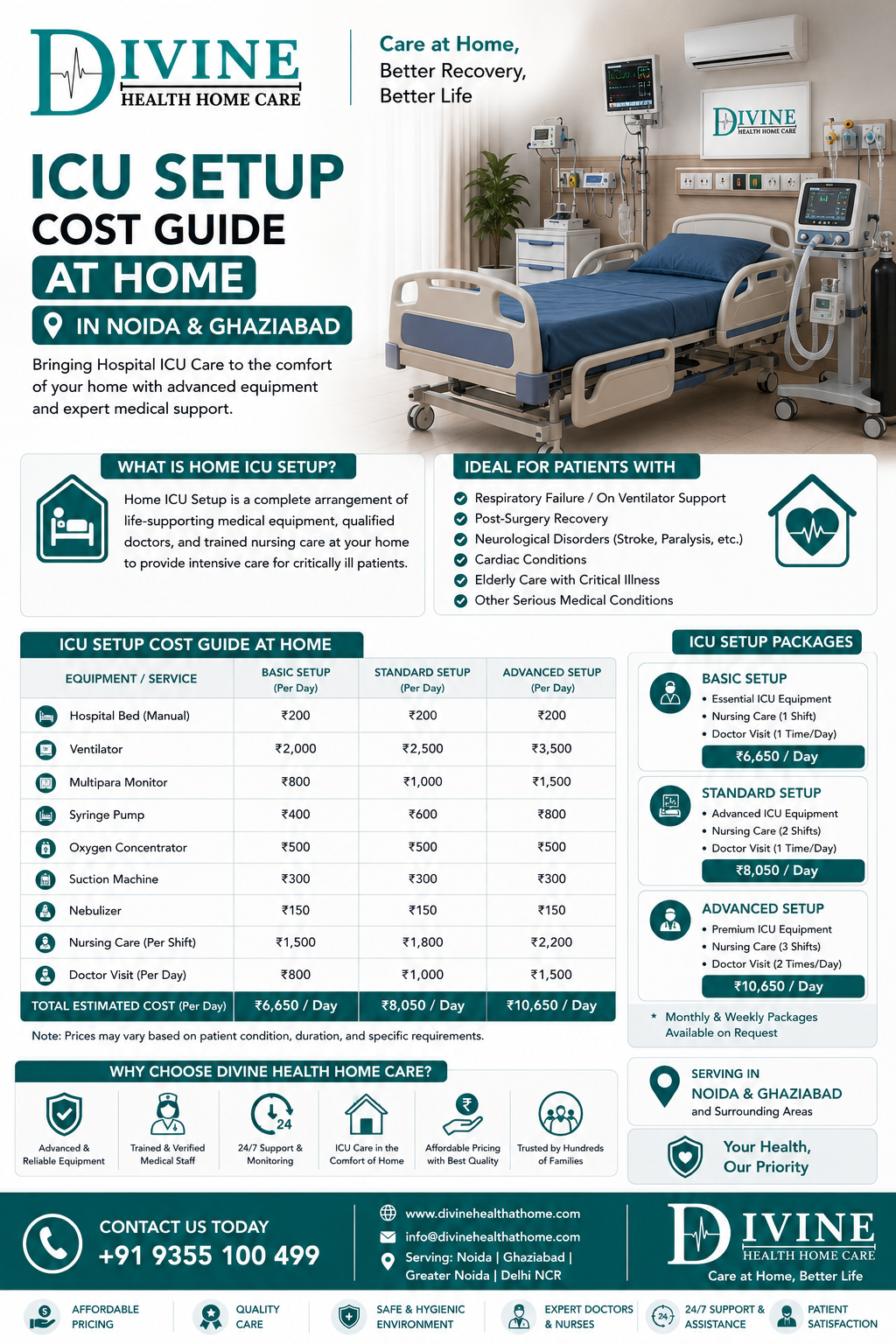
ICU at Home is a healthcare service that brings selected intensive care equipment and trained healthcare professionals to a patient's residence. It is generally intended for patients who are clinically stable but continue to require advanced monitoring, respiratory support, nursing care, or rehabilitation after hospital discharge.
A home ICU setup may include:
- Hospital ICU bed
- Ventilator (when prescribed)
- BiPAP or CPAP machine (if prescribed)
- Multiparameter patient monitor
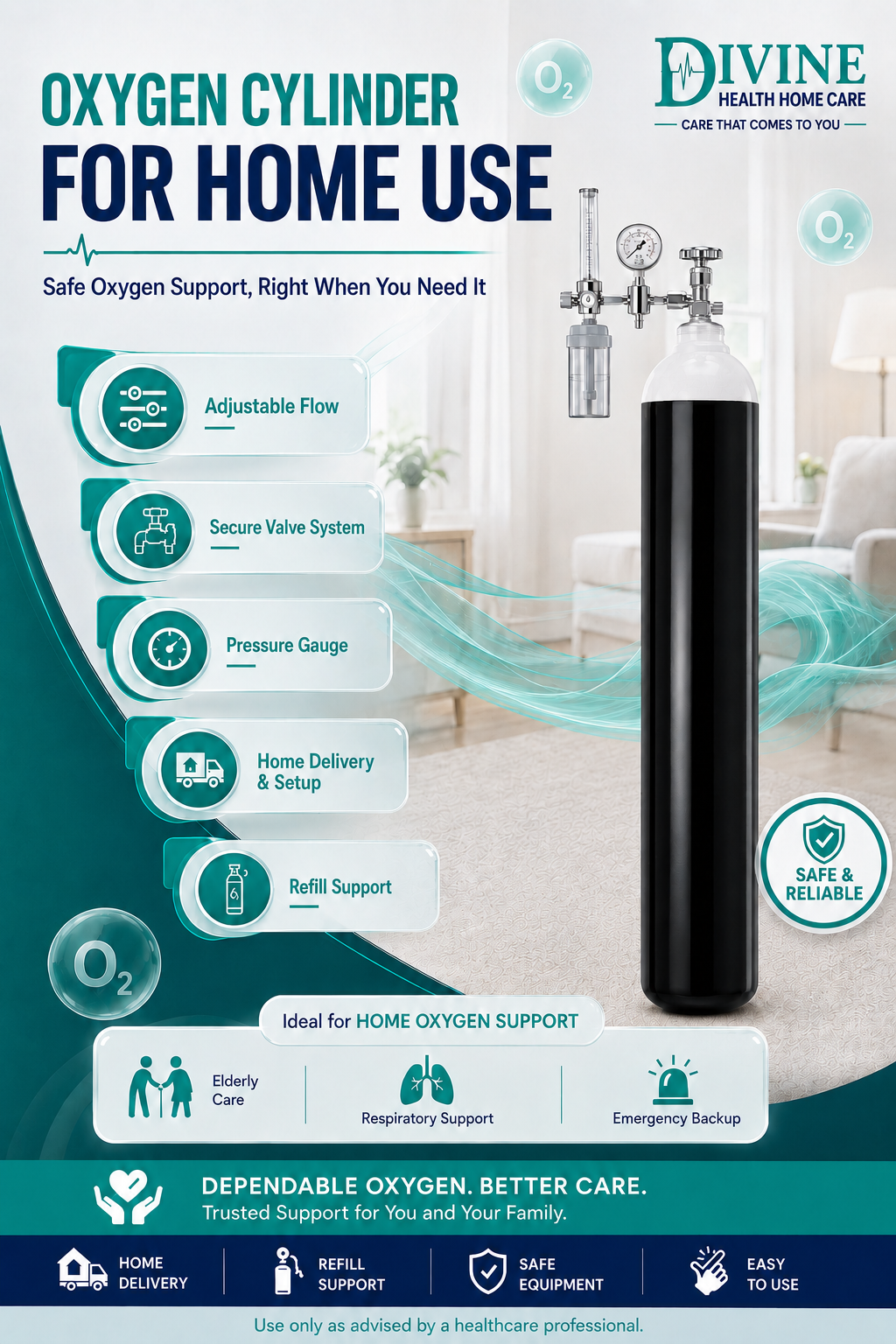
- Oxygen concentrator or oxygen cylinders
- Suction machine
- Infusion or syringe pumps
- Air mattress
- Pulse oximeter
- Professional nursing care
Familiar Environment
Receiving care at home can provide a more comfortable and familiar setting, which may contribute positively to emotional well-being for some patients.
Greater Family Involvement
Family members can participate more actively in the patient's daily care and recovery process while working alongside healthcare professionals.
Reduced Exposure to Hospital-Acquired Infections
Recovering at home may reduce exposure to infections associated with prolonged hospital stays, although infection prevention practices remain essential.
Personalized Care
Home ICU services are typically tailored to the patient's individual medical requirements and prescribed treatment plan.