CPAP vs Oxygen Concentrator
Compare CPAP vs Oxygen Concentrator and learn the differences, benefits, uses, and features. Understand which device is suitable for sleep apnea, respiratory conditions, and oxygen therapy based on medical needs.
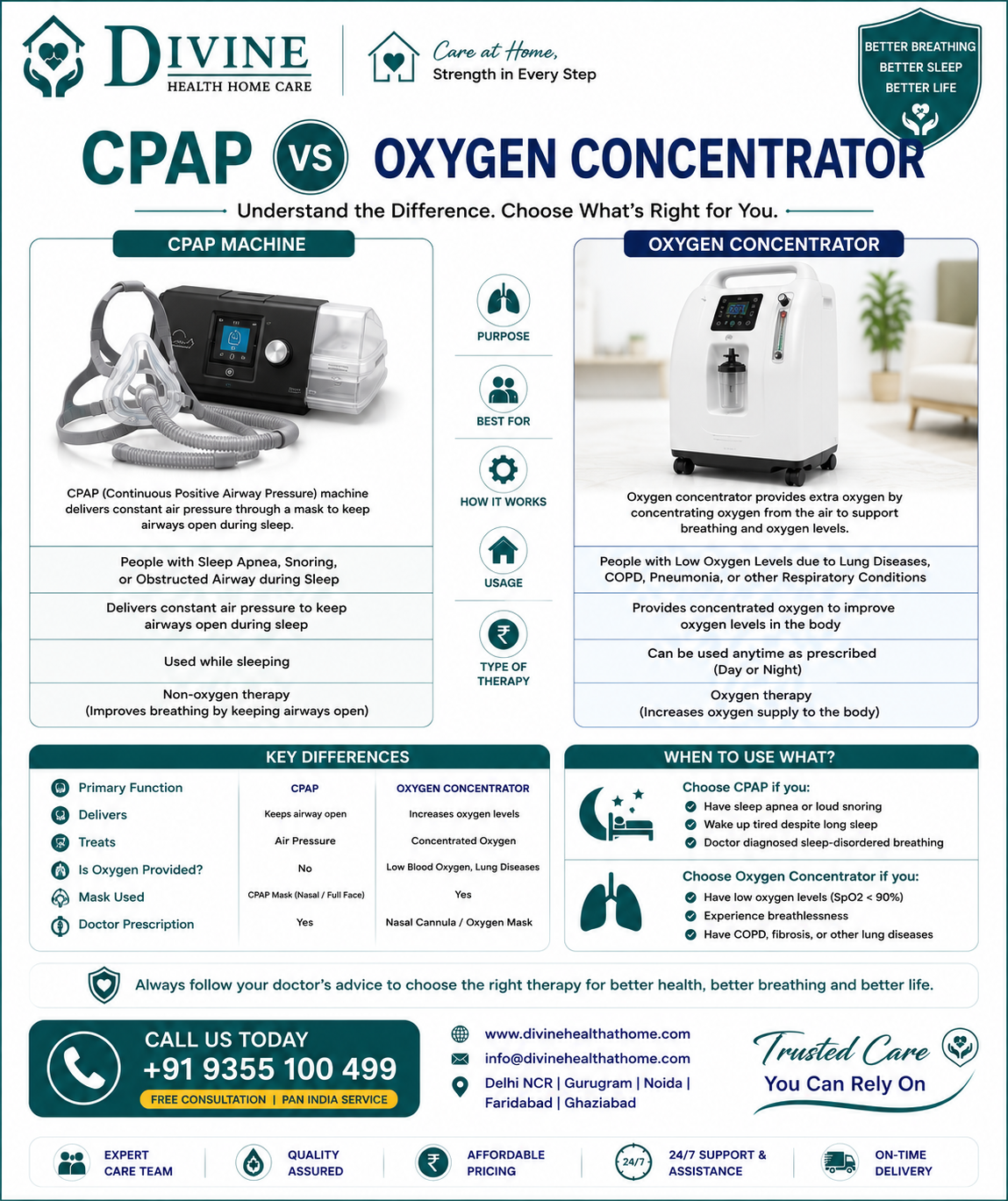
Updated on 01 Jul 2026 | 4 min readAlthough CPAP machines and oxygen concentrators are both used to support people with breathing-related medical conditions, they serve very different purposes. A CPAP (Continuous Positive Airway Pressure) machine keeps the airway open by delivering a continuous stream of pressurized air, while an oxygen concentrator supplies oxygen-enriched air to patients whose blood oxygen levels are lower than normal.
These devices are not interchangeable. A CPAP machine is primarily used for sleep-related breathing disorders, whereas an oxygen concentrator is prescribed for patients who require supplemental oxygen therapy due to respiratory or certain cardiac conditions. The appropriate device depends on the patient's diagnosis and should always be selected based on the recommendation of a qualified healthcare professional.
What is a CPAP Machine?
A CPAP machine delivers a continuous flow of pressurized room air through a mask worn over the nose or nose and mouth. The positive air pressure helps prevent the upper airway from collapsing during sleep, allowing the user to breathe more consistently.
CPAP machines do not produce oxygen or increase the oxygen concentration in the air. They simply maintain an open airway by providing continuous positive pressure.
Common Uses of a CPAP Machine
-
Obstructive Sleep Apnea (OSA)
- Snoring associated with airway obstruction
- Mild sleep-related breathing disorders
- Long-term sleep therapy (when prescribed)
What is an Oxygen Concentrator?
An oxygen concentrator is a medical device that draws in room air, removes most of the nitrogen using Pressure Swing Adsorption (PSA) technology, and delivers oxygen-enriched air through a nasal cannula or oxygen mask.
Unlike a CPAP machine, an oxygen concentrator is designed to increase the amount of oxygen available to patients who have low blood oxygen levels.
Common Uses of an Oxygen Concentrator
-
Chronic Obstructive Pulmonary Disease (COPD)
- Pulmonary fibrosis
- Chronic respiratory diseases
- Pneumonia recovery
- Long-term oxygen therapy
- Other medical conditions requiring supplemental oxygen as prescribed by a healthcare professional
Advantages of a CPAP Machine
-
Helps maintain an open airway during sleep
- Supports uninterrupted breathing in people with obstructive sleep apnea
- May reduce snoring associated with airway collapse
- Compact and easy to use
- Suitable for long-term home therapy
- Available in fixed-pressure and auto-adjusting models
Advantages of an Oxygen Concentrator
-
Provides continuous oxygen-enriched air
- No need for oxygen cylinder refills
- Suitable for long-term oxygen therapy
- Available in stationary and portable models
- Reliable for home and clinical use
- Lower long-term operating costs than repeated oxygen cylinder refills
Can a CPAP Machine Replace an Oxygen Concentrator?
CPAP machine cannot replace an oxygen concentrator because it does not increase the oxygen concentration in the air. Likewise, an oxygen concentrator cannot treat obstructive sleep apnea by keeping the airway open.
In some cases, a healthcare professional may prescribe oxygen therapy in combination with CPAP therapy. This should only be done under medical supervision with equipment that is compatible for combined use.
Which Device Should You Choose?
Choose a CPAP Machine If:
-
You have been diagnosed with obstructive sleep apnea.
- Your healthcare professional has prescribed CPAP therapy.
- Your primary problem is airway collapse during sleep rather than low oxygen levels.
Choose an Oxygen Concentrator If:
-
You require supplemental oxygen because of low blood oxygen levels.
- Your doctor has prescribed long-term oxygen therapy.
- You have a chronic respiratory condition requiring oxygen support.
Factors to Consider
Before choosing a respiratory support device, consider:
- Medical diagnosis
- Prescribed treatment
- Oxygen saturation levels
- Required airflow or oxygen flow rate
- Portability requirements
- Noise level
- Power consumption
- Ease of maintenance
- Manufacturer support and warranty