Oxygen Concentrator Rental Guide for Beginners
Learn everything about oxygen concentrator rental for beginners. Understand types, benefits, usage, factors to consider and home oxygen therapy guidance.
Updated on 21 May 2026 | 4 min readChoosing the right oxygen support solution can be an important decision for patients and caregivers. For individuals who need temporary or long-term oxygen therapy, renting an oxygen concentrator can be a practical and cost-effective option.
This guide explains what an oxygen concentrator is, how oxygen concentrator rental works, and what beginners should know before selecting equipment for home respiratory care.
At Divine Health Home Care, we help patients and families access dependable oxygen therapy equipment with professional support and guidance.
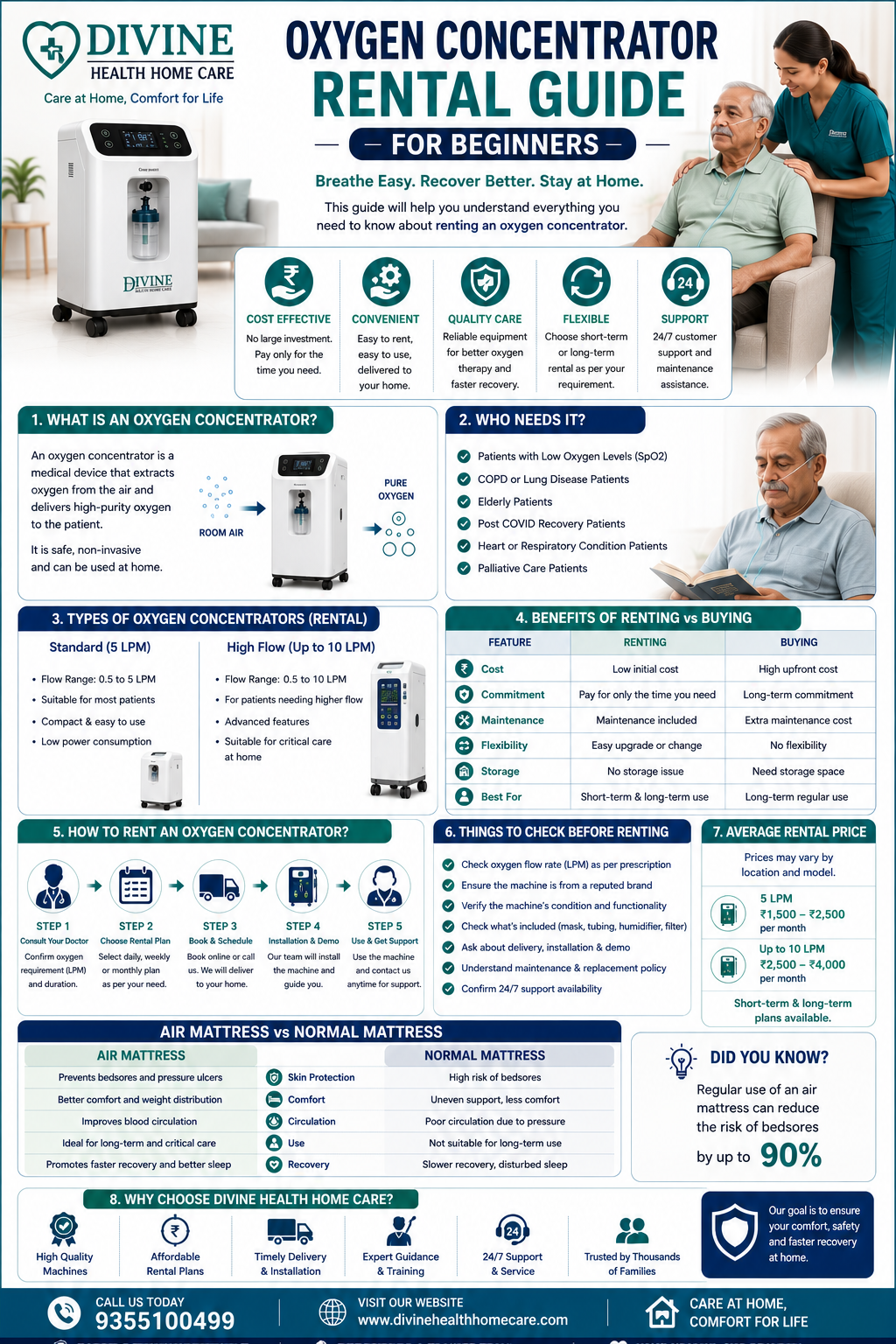
What is an Oxygen Concentrator?
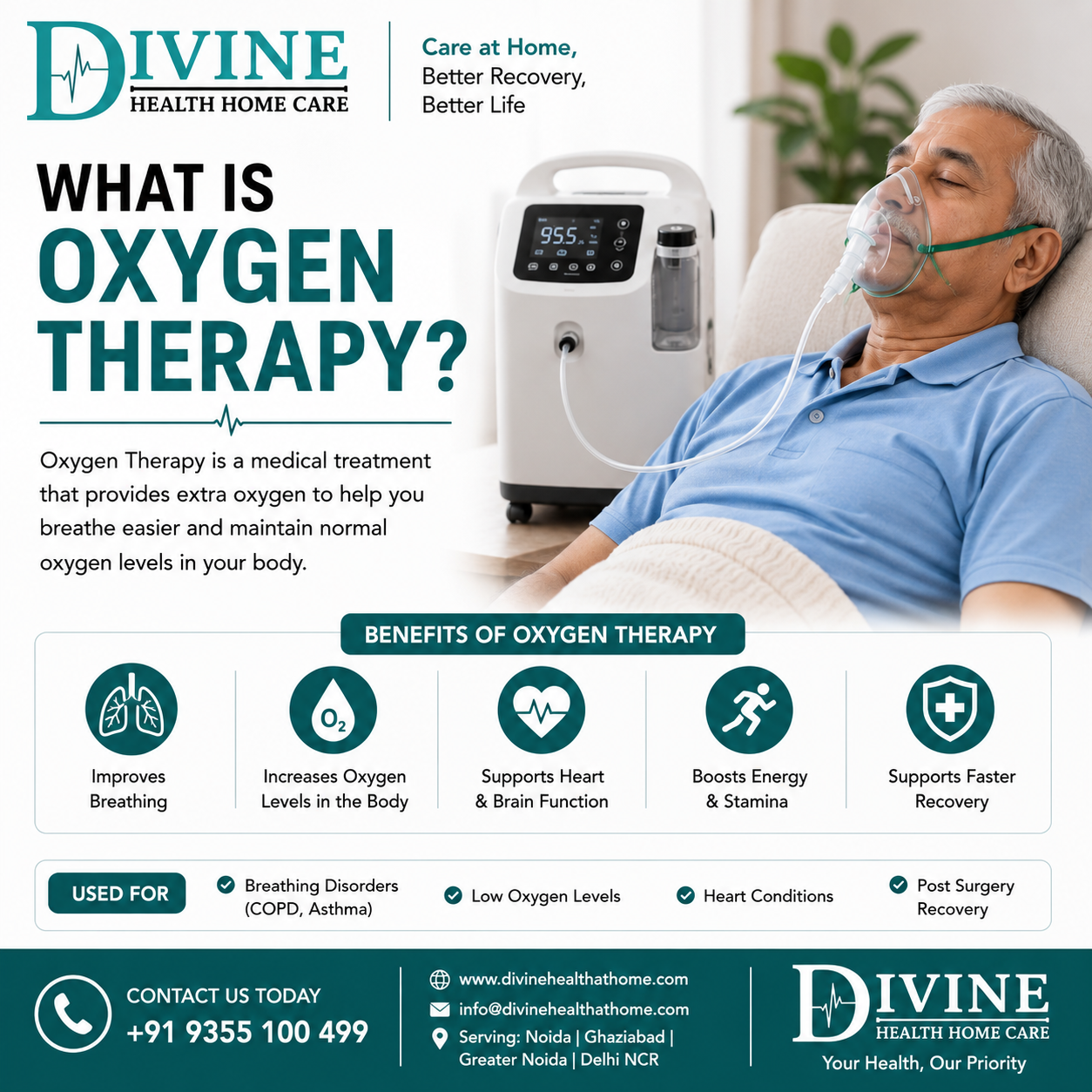
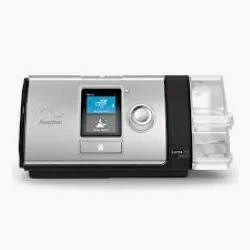
An oxygen concentrator is a medical device designed to take surrounding air, separate oxygen, and deliver concentrated oxygen to the patient through tubing or a mask.
Unlike oxygen cylinders, oxygen concentrators do not store oxygen. They continuously generate oxygen while operating, making them suitable for home oxygen therapy and ongoing respiratory support.
Why Rent an Oxygen Concentrator?
Renting can be a suitable option when oxygen support is required for a limited period or when purchasing equipment may not be necessary.
Benefits of Oxygen Concentrator Rental
-
Lower upfront cost compared to purchasing
- Access to medical-grade equipment
- Flexible usage duration
- Suitable for temporary oxygen requirements
- Professional setup and support
- Convenient for home healthcare environments
Types of Oxygen Concentrators
Understanding the available options helps in choosing equipment that matches patient requirements.
1. Stationary Oxygen Concentrator
Stationary units are designed for home use and provide continuous oxygen support in a fixed location.
- Long-term oxygen therapy
- Home healthcare
- Continuous daily use
2. Portable Oxygen Concentrator
Portable models are lighter and designed for easier movement and daily mobility.
- Travel support
- Active users
- Short-distance portability