What is BiPAP?
Learn what a BiPAP machine is, how it works, its benefits, uses, and who may need BiPAP therapy. Understand the difference between BiPAP and CPAP, common applications, and how BiPAP supports patients with breathing difficulties.
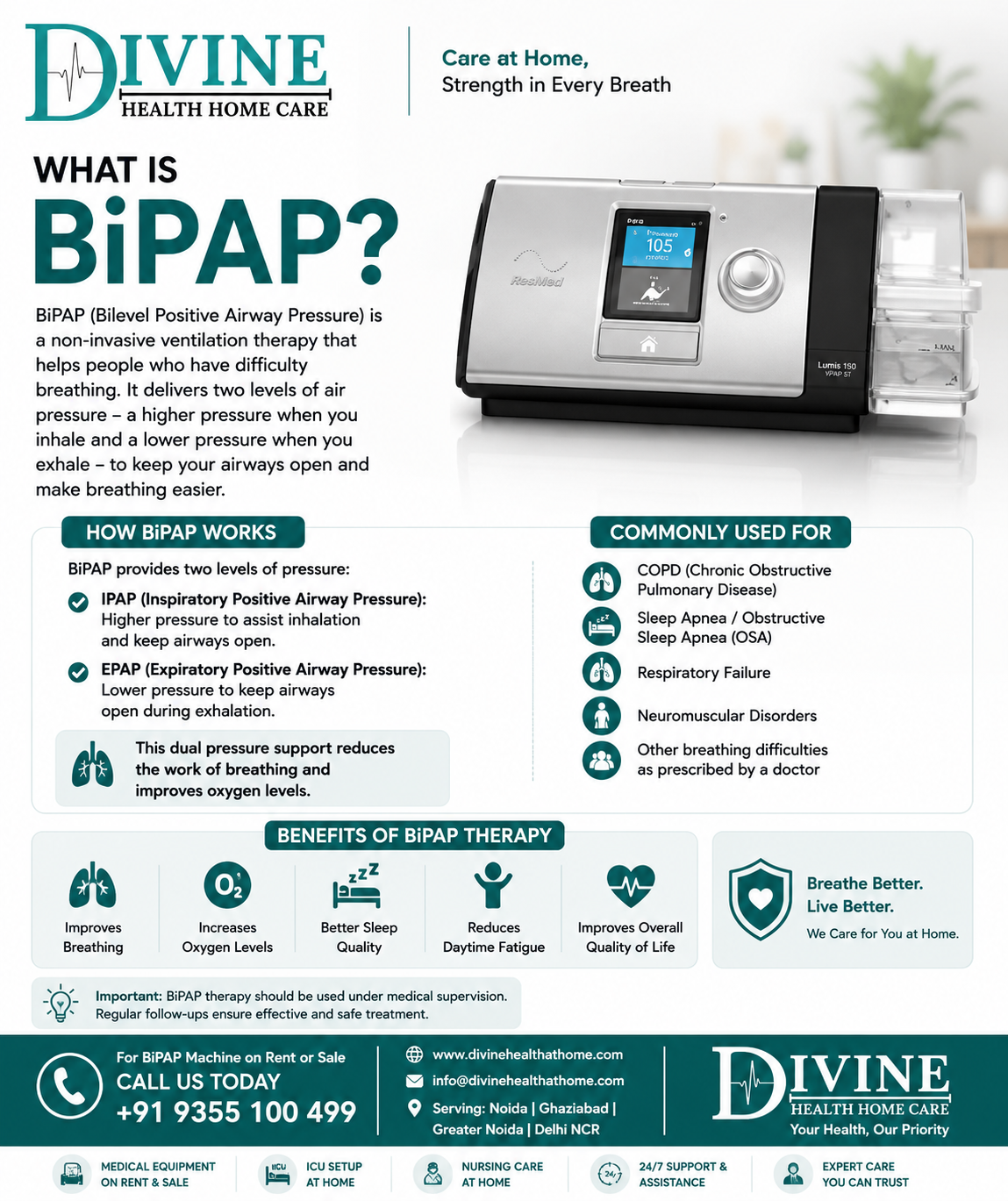
Updated on 08 Jul 2026 | 4 min readA BiPAP (Bilevel Positive Airway Pressure) machine is a non-invasive respiratory support device that helps people breathe more comfortably by delivering pressurized air through a face or nasal mask. Unlike a ventilator, a BiPAP machine does not take over breathing completely. Instead, it assists patients who can still breathe on their own but need additional support to make breathing easier.
A BiPAP machine provides two different levels of air pressure:
- IPAP (Inspiratory Positive Airway Pressure): A higher pressure delivered while inhaling to help the lungs expand more easily.
- EPAP (Expiratory Positive Airway Pressure): A lower pressure during exhalation, allowing the patient to breathe out comfortably.
This dual-pressure system reduces the effort required to breathe and improves ventilation for many patients with respiratory disorders.
How Does a BiPAP Machine Work?
A BiPAP machine draws in room air, pressurizes it, and delivers it through tubing connected to a properly fitted mask. Sensors continuously monitor the patient's breathing and switch automatically between higher inspiratory pressure and lower expiratory pressure.
The machine helps:
-
Reduce the work of breathing
- Improve airflow into the lungs
- Support carbon dioxide removal
- Maintain more comfortable breathing patterns
- Improve overall ventilation
BiPAP therapy should always be used according to the settings prescribed by a qualified healthcare professional.
Common Uses of a BiPAP Machine
A healthcare professional may recommend BiPAP therapy for selected patients with conditions such as:
- Chronic Obstructive Pulmonary Disease (COPD)
- Obstructive Sleep Apnea (when BiPAP is more appropriate than CPAP)
- Obesity Hypoventilation Syndrome
- Neuromuscular disorders
- Certain chronic respiratory conditions
- Respiratory muscle weakness
- Chronic respiratory insufficiency
- Selected cases of heart failure with breathing difficulties
The suitability of BiPAP depends on the patient's medical condition and should always be determined by a physician.
Benefits of a BiPAP Machine
Using a BiPAP machine may provide several benefits when prescribed appropriately:
- Makes breathing more comfortable
- Reduces breathing effort
- Supports better ventilation
- Improves sleep quality in appropriate patients
- Helps maintain more stable oxygen and carbon dioxide levels
- Non-invasive treatment through a mask
- Suitable for home or hospital use under medical supervision
- Compact and relatively easy to operate
- Can improve comfort during long-term respiratory support